









We apply Korea's New Technology (NET) and green technology certifications
to maintain maximum generation efficiency and safe power production.

Applied technology
and quality certification

Applied technology and quality certification

Patents

License

Korea Intellectual Property Office

PV generation system and method with generation compensation and leakage monitoring using self-generated power (KIPO Reg. No. 10-2450435)

PV generation system with high-efficiency bypass and fire prediction algorithm (KIPO Reg. No. 10-2736826)

Technology and quality certification

Technology and quality certification

  • New Technology (NET) Voltage compensation technology for improved PV string partial-shading efficiency (MOTIE No. 1582)
  • Green Technology PV string circuit voltage compensator manufacturing technology (MSIT No. GT-25-02440)
  • Performance certification PV system with string-circuit voltage compensator for improved generation efficiency (MSS No. 25-ABD0238)
  • Innovative product PV system with string-circuit voltage compensator for improved generation efficiency (KIPO No. 2025-465)
  • Outstanding invention PV system with string-circuit voltage compensator for improved generation efficiency (KIPA No. 2025-5059)
  • K-mark String-circuit voltage compensator for improved PV system efficiency (KTL No. PC12025-115) and 2 others
  • KS certification KS C 8567 PV generation junction box (KEMCO No. PV0624381)
  • GS Grade 1 PV generation monitoring system v1.0 (KTC No. GS2024-00012)
New Technology certification
Green certification
Innovative product
Performance certification
Quality certification
K-mark quality certification
Q-mark quality certification
KS certification

Product Composition

Product composition

Product features

New Technology (NET) for maximum generation efficiency and safe power production

Product Features

Product features

Improved power generation efficiency

Improved power generation efficiency

Product feature 01
New Technology certification
Green certification
Innovative product
Performance certification
Quality certification
Reactive power compensation technology

Reactive power compensation technology

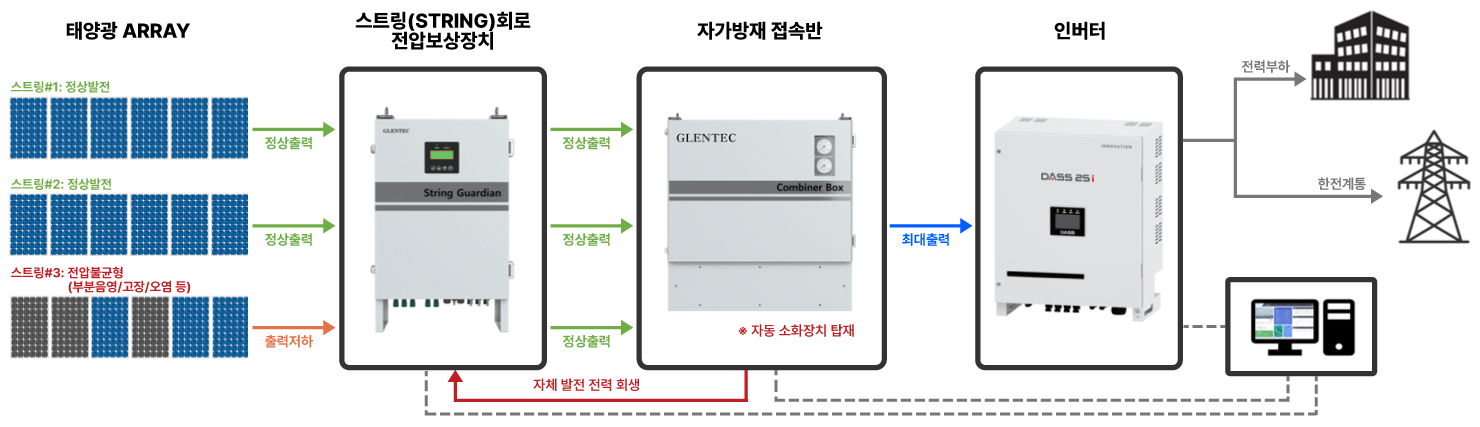
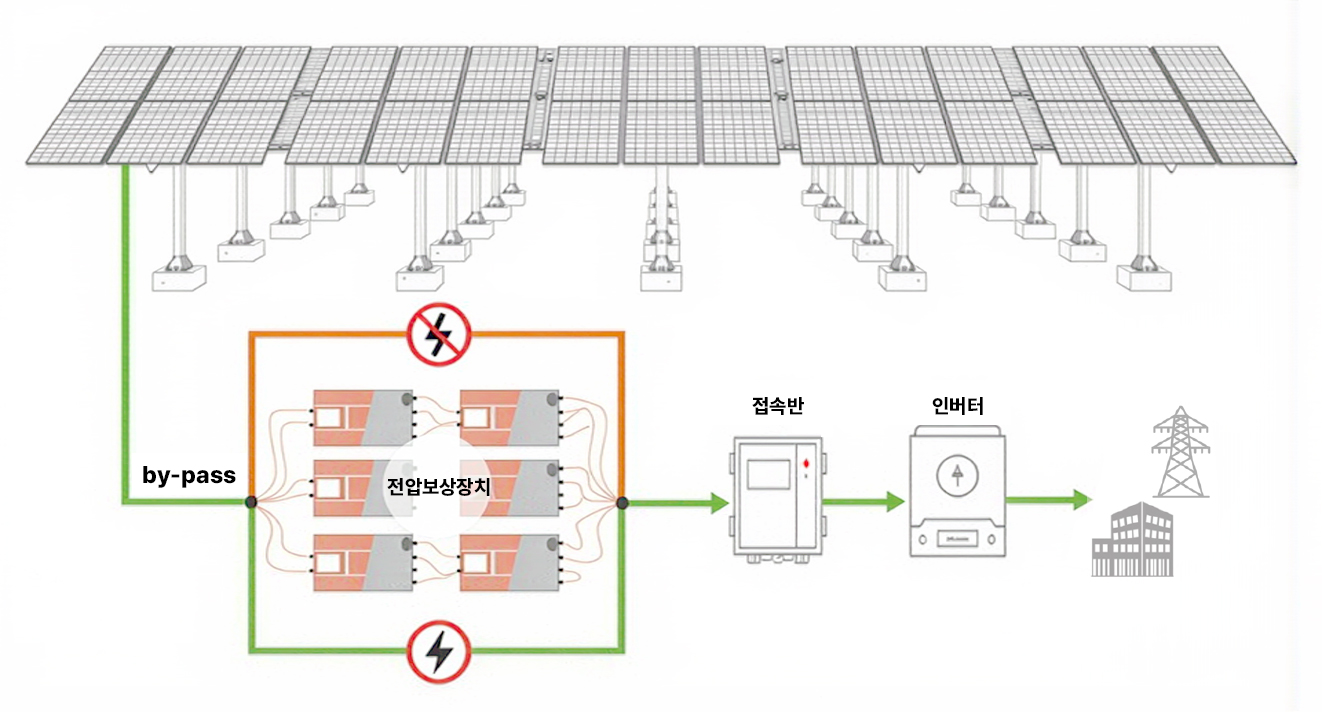
Maximizes generation efficiency by using (compensating) self-generated power that would otherwise be lost to shading, soiling, or faults to resolve power imbalance per circuit.

High-efficiency by-pass circuit

High-efficiency by-pass circuit

During normal operation the by-pass circuit prevents even the compensator from consuming power; when a fault occurs, by-pass ensures continued normal operation.

Fewer components, fewer break points

Fewer components, fewer break points

String-level compensation circuitry uses simple components to reduce break points and the risk of circuit failure and generation stoppage.

Strengthening disaster safety

Strengthening disaster safety

Product feature 02
New Technology certification
Green certification
Innovative product
Performance certification
Quality certification
Accurate anomaly detection

Accurate anomaly detection

Monitors in real time for risks such as circuit faults, short circuits, ground faults, and leakage, supporting safety management without the need for 24/7 standby.

Rapid Shutdown Device (RSD) per circuit

Rapid Shutdown Device (RSD) per circuit

When an electrical hazard is detected, it automatically cuts power output from the modules to prevent fire and safety accidents.

Self-contained fire suppression

Self-contained fire suppression

In the event of a fire, an electrical fire suppression system suppresses the fire within 2 seconds, fulfilling the role of emergency response.

Integrated surveillance

Integrated surveillance

Product feature 03
Q-mark quality certification
Real-time integrated monitoring

Real-time integrated monitoring

Provides operators in real time with generation compensation, per-circuit fault monitoring, fire detection, and weather data for quick verification and response.

Background and necessity
of product development

Background and necessity of product development

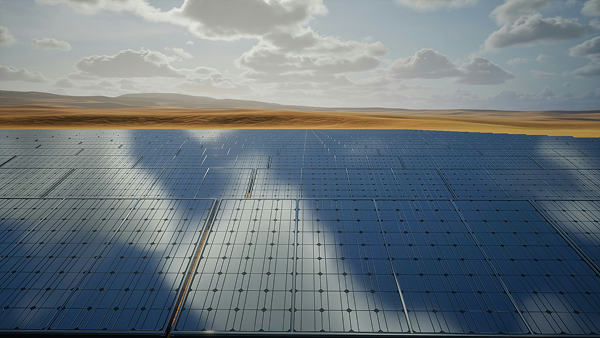
Even desert power plants

cannot escape the shadow of clouds

Reduced power generation efficiency

Reduced power generation efficiency

Background and necessity 01

We lose more power than we think.

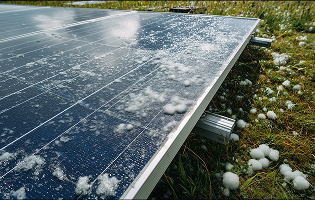
According to research, PV systems in Korea are affected by shading and similar factors for an average of 24% of daily generation time per year.

In Korea, with its limited land and distinct four seasons, PV systems face diverse factors that reduce efficiency—shading, soiling, surrounding environment and climate, and faults and construction defects—so voltage compensation equipment is needed to mitigate them.

Urban redevelopment
Adjacent new construction
Limited space
Climate (snow)
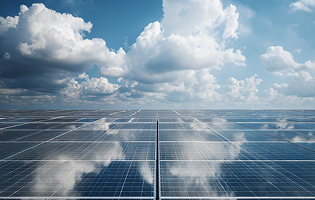
Climate (clouds)
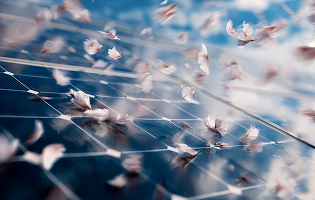
Climate (fallen leaves)
Obstruction (tree growth)
Obstruction (birds)
Obstruction (debris)

Power waste of components

Power waste of components

Background and necessity 02

Even small amounts of power wasted over time add up to a power plant.

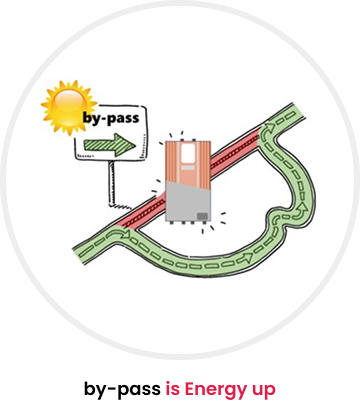
During normal operation, the circuit should be by-passed so that
power is not wasted by idle components (voltage compensators).

By-pass structure
Component power waste diagram

Risk of safety accidents

Risk of safety accidents

Background and necessity 03

Electrical equipment poses ongoing risk of injury and property damage from various failures. It must detect electrical anomalies, cut power immediately, and in the event of fire suppress it on its own—addressing safety for unmanned operation without 24/7 staff.

Circuit fault / open circuit

In PV circuits, an open circuit means conductors are physically broken (damaged wiring, poor connections, environmental factors), losing circuit continuity. This can cause system malfunction and directly lead to fire and electric shock.

Short circuit

In PV circuits, a short circuit is when current flows abnormally or the circuit is suddenly interrupted due to internal defects, module damage, shading, snow, etc. Conductors or parts connect with little or no resistance, causing a current surge and serious risk of shock, fire, or equipment failure.

Ground fault / earth leakage

In PV circuits, a ground fault is when part of the circuit is electrically connected to earth (damaged insulation, moisture, poor grounding), so current leaks to ground instead of the normal path. This can cause equipment errors and increase the risk of fire and electric shock.

Arc fault

Arc fault

Circuit damage

Circuit damage

Component failure

Component failure

Fire

Fire

Electric shock

Electric shock

Prime examples

Prime examples

Background and necessity 04
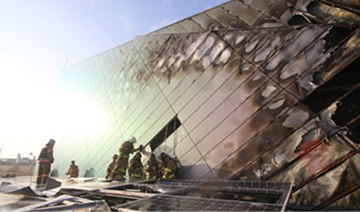
PV facility fire Incheon concert hall PV facility fire

Fire at Incheon concert hall construction site PV facility, November 2019

According to Incheon Seobu Fire Station, a fire broke out at around 2:50 p.m. on the 26th at the Cheongna Complex Culture Center concert hall construction site in Gyungseo-dong, Seo-gu, and was extinguished about 50 minutes later at 3:40 p.m. The fire damaged the two-story building rooftop (165㎡) and PV modules, with property damage estimated by the fire station at about 130 million won.


Source: AI Times (https://www.aitimes.com)

Image: Incheon Seobu Fire Station

Safety inspection and completion delay Cheongna Bluenova Hall fire damage

Fire-damaged Cheongna Bluenova Hall unlikely to open in first half of year

Detailed safety inspection delayed… repair scope undecided
Cheongna Bluenova Hall at Incheon Cheongna Complex Culture Center, which caught fire two days before completion, is unlikely to open in the first half of the year. Seo-gu concluded that the fire was caused by an electrical fault in the junction box of the rooftop PV system and began a detailed safety inspection.

Source: Incheon Ilbo, December 4, 2019

Image: Incheon Seo-gu

Legal dispute and major losses Cheongna Bluenova Hall fire repair

20 billion won over 2 years for fire repair at Cheongna Bluenova Hall

Fire days before completion… repair took 2 years
Analyzing the cause and carrying out repairs took two years. Water used to extinguish the fire soaked the hall walls, requiring removal and replacement. Seo-gu spent 2 billion won on repairs, and damage compensation lawsuits against the constructor, PV contractor, and supervisor are still ongoing.

Source: Incheon Ilbo, September 30, 2021

Image: Incheon Seo-gu Culture Foundation official blog

Functional loss caused by a faulty part

Functional loss caused by a faulty part

Background and necessity 05

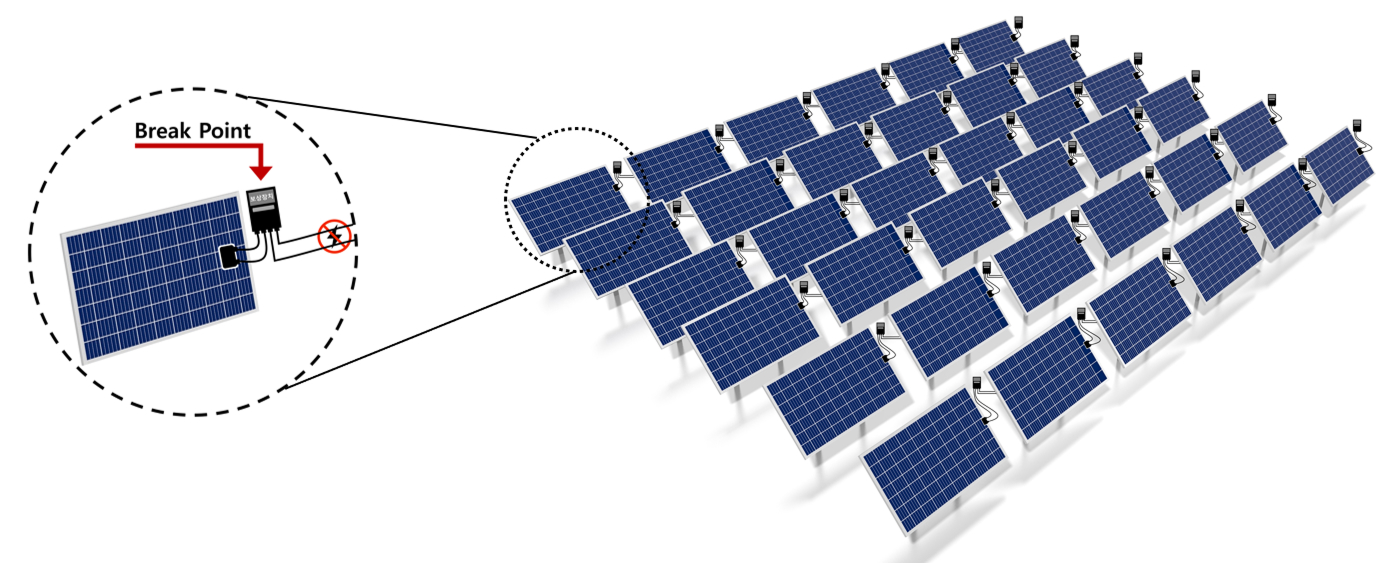
More components mean more Break Points and a higher risk of generation loss.

Module-level installation and auxiliary equipment increase the number of components and thus break points. When a part fails, the connected circuit may not function properly and system generation efficiency drops, so the number of components should be minimized.

Functional loss caused by faulty part - Break point diagram

Installation Type

Installation type

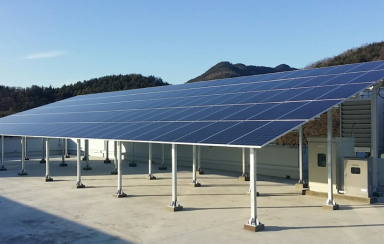
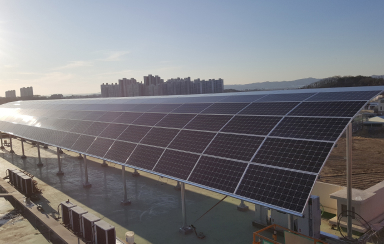
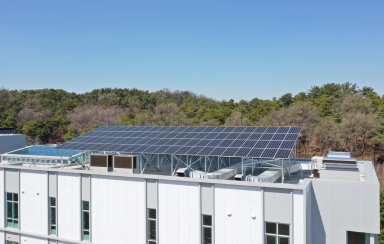
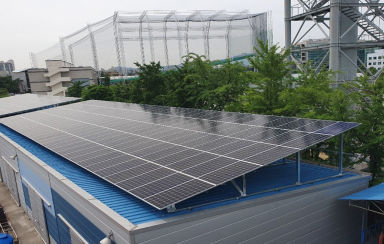
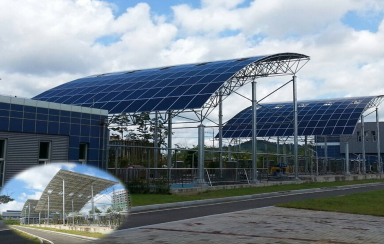
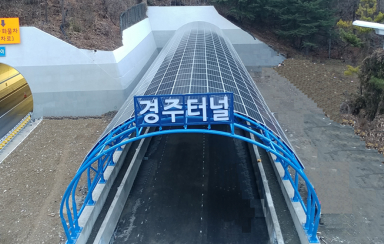
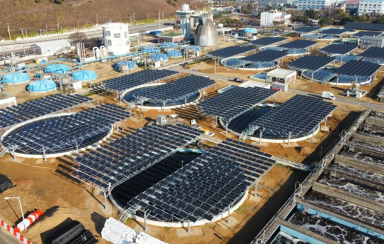
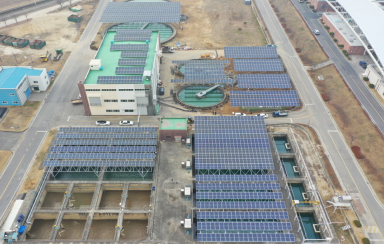
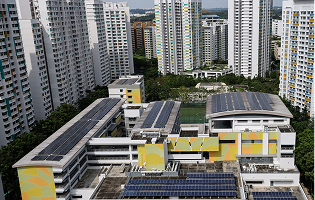
Glen Tec products are solutions suited to a variety of installation environments.

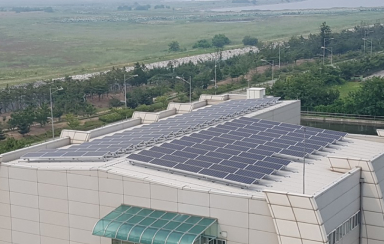
Rooftop

Daegu Aviation Safety Control Center (41kW)

Saeteo Elementary School, Cheongju (50kW)

LH Korea Land and Housing Institute, Daejeon (30kW)

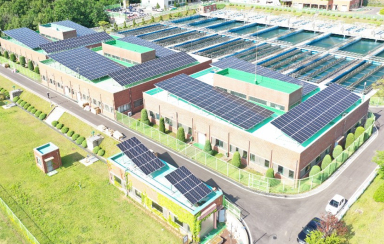
Buchoen Gachul Water Purification Plant (652kW)

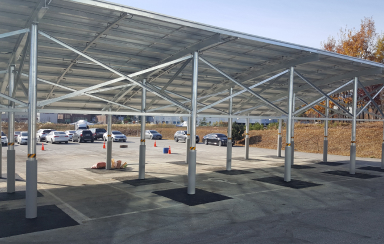
Parking lot

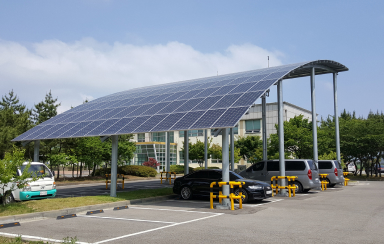
Incheon Environment Corporation Unbuk Office (50kW)

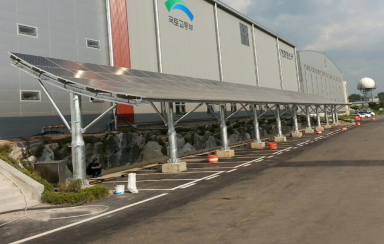
Gimpo Airport aircraft hangar (62kW)

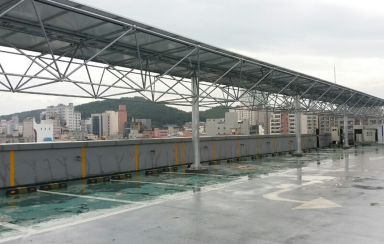
Ulsan City Hall parking lot rooftop (90kW)

Gangwon Technopark New Materials Division (160kW)

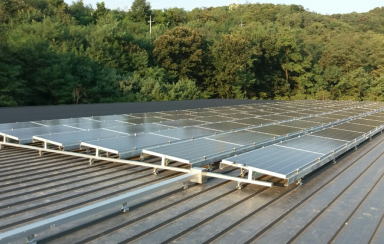
Roof

Incheon Free Economic Zone seawater treatment facility (80kW)

Seoknam Sports Park, Incheon Seo-gu (28kW)

Yeminon Industrial Complex, Jeongseon (151kW)

Seongdong Road Office, Seoul (141kW)

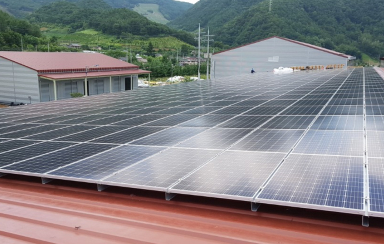
Other

Jungchon Industrial Complex wastewater treatment plant, Jinju (80kW)

Korea Expressway Corporation Gyeongbu Line Gyeongju Tunnel entrance (147kW)

Siheung City Hall Clean Water Management Center, Gyeonggi (1000kW)

Seoul Gangbuk Arisu Water Purification Center (578kW)